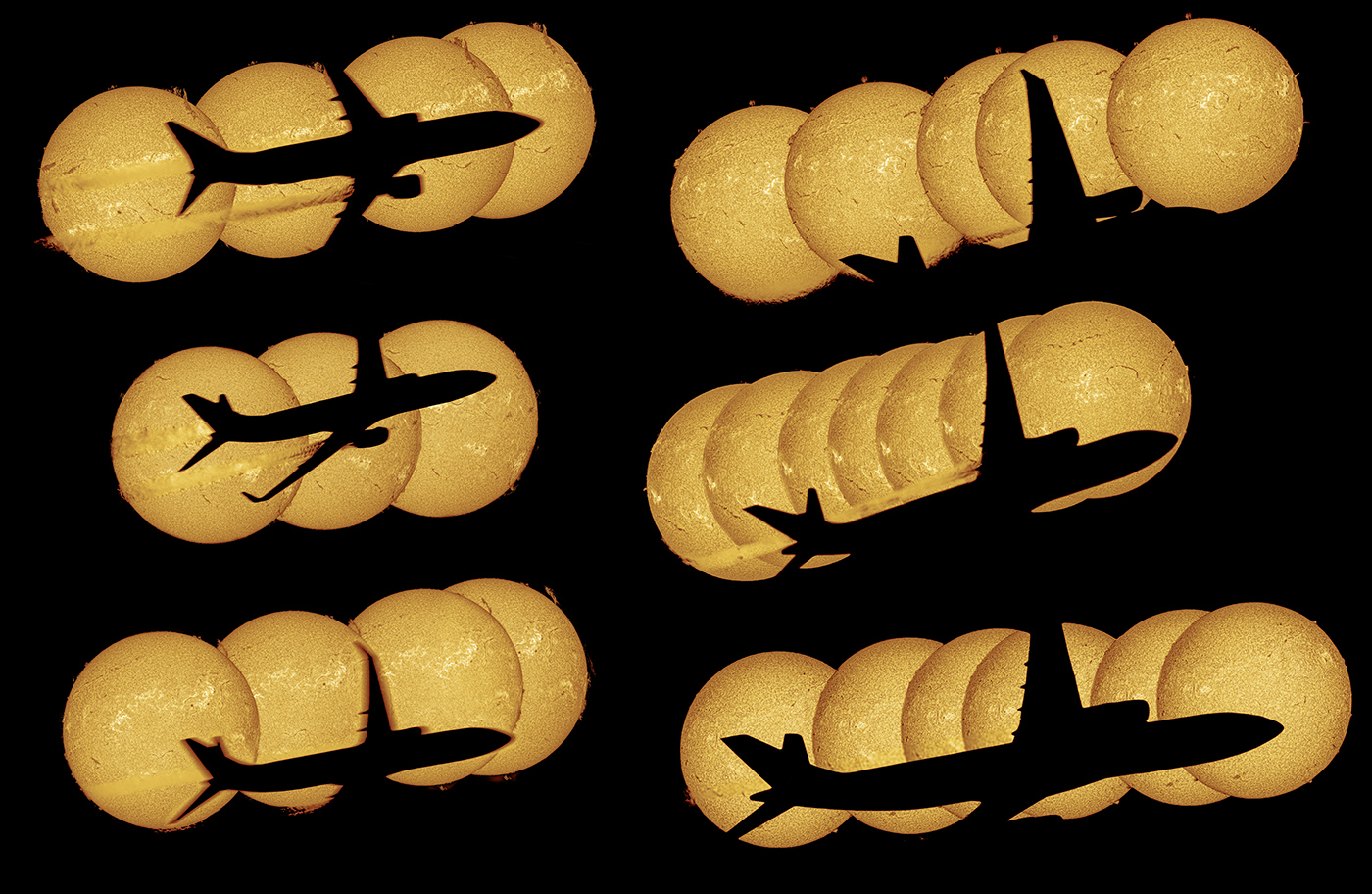

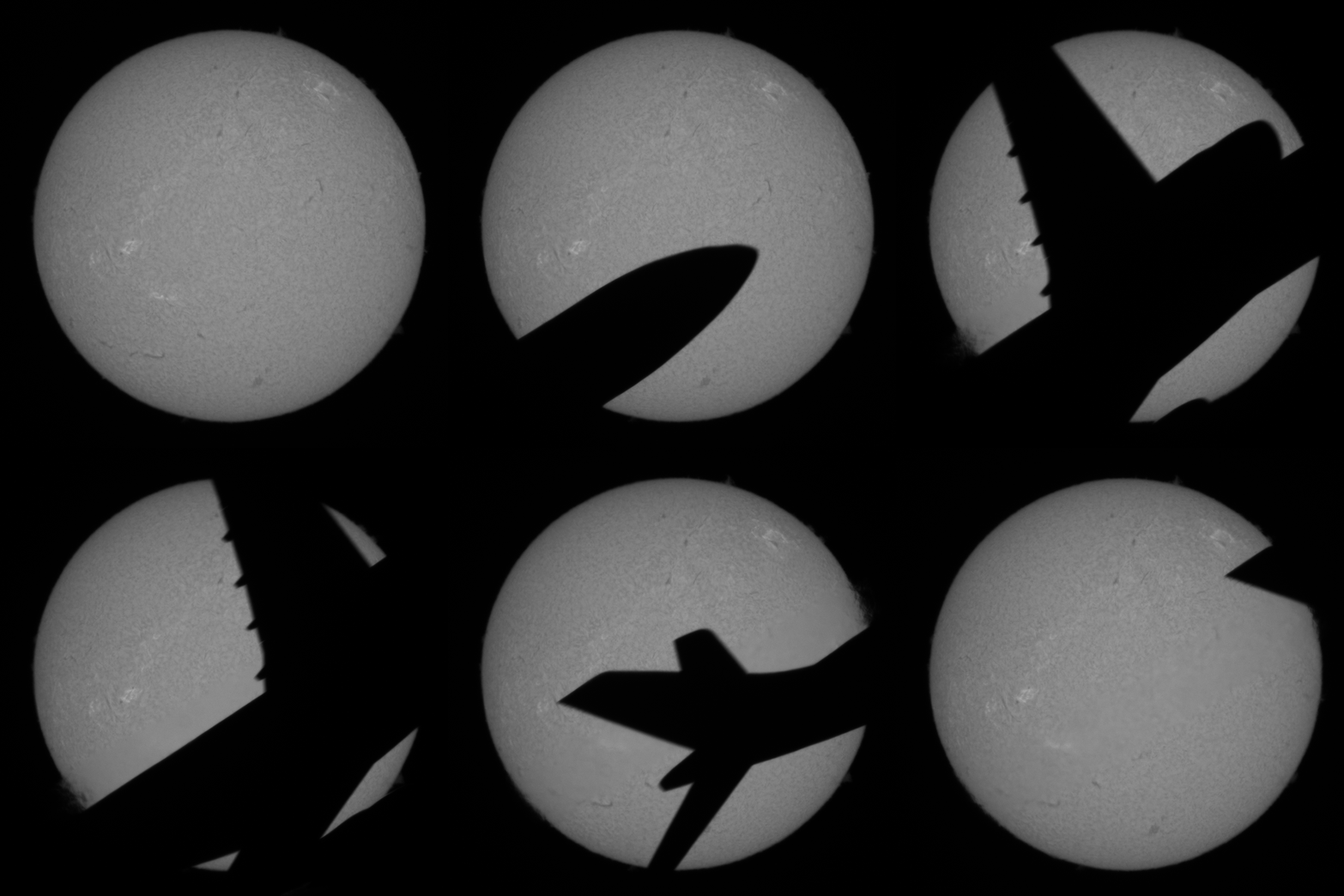
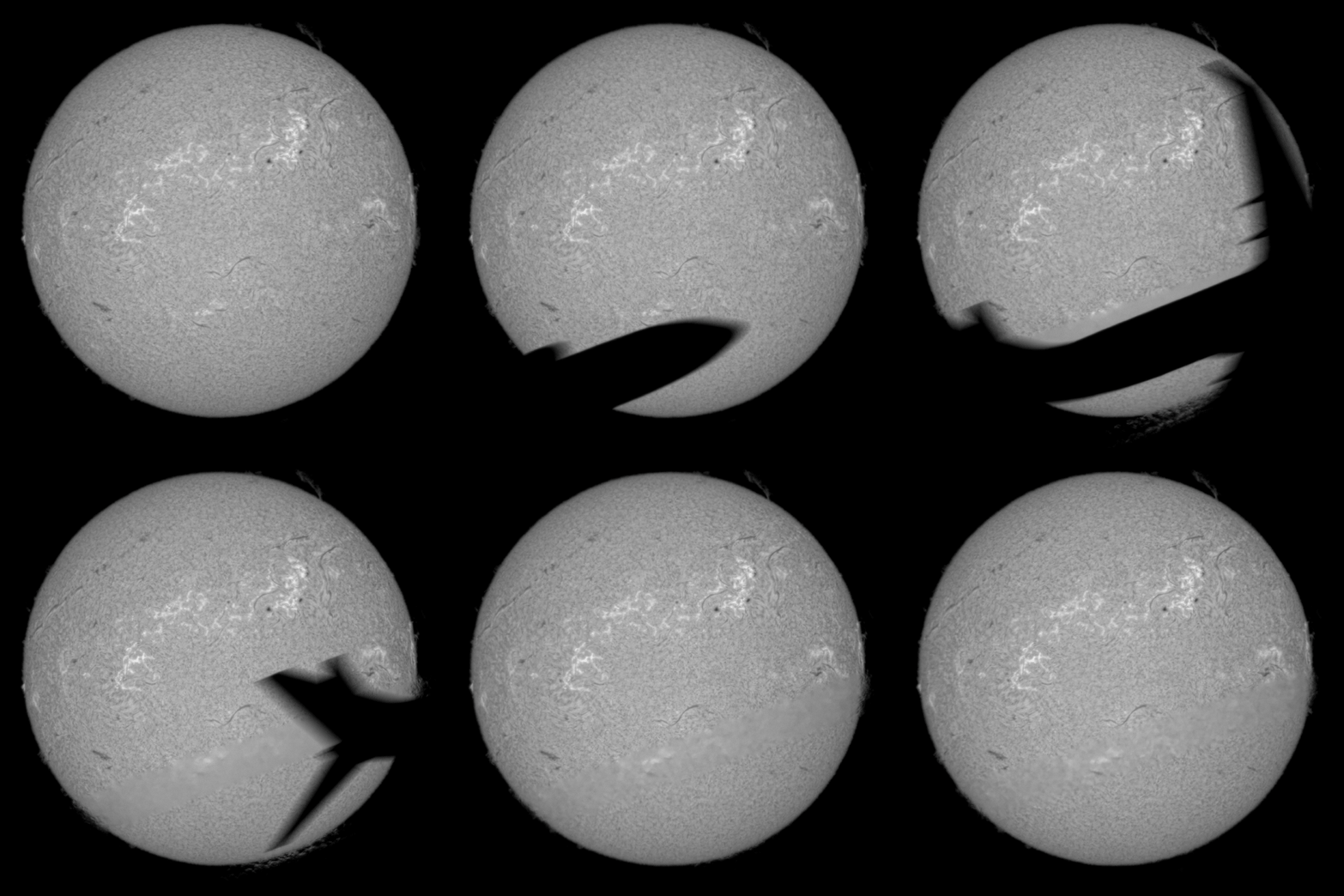
From late October to early December a surprising number of aircraft arriving into Sydney International Airport
literally "photo-bomb" solar observations from Barden Ridge Observatory, flying directly in front of the Sun.
Uninterrupted, the imaging runs typically consist of 2000 frames, of which the sharpest
images are stacked and processed to produce a solar disk image with sharp chromospheric details.
It is called "lucky imaging" , as by taking thousands of images, a few will be very likely free
of atmospheric turbulence that typically distorts an image
("lucky" in this case is not catching a passing aeroplane by chance ).
During "transit season" the Sun's mid morning
altitude
& azimuth
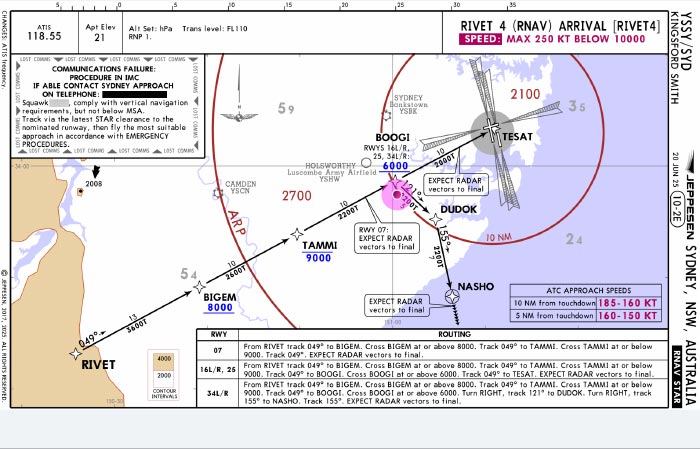
closely matches that of arriving aircraft,
following the Rivet 4 STandard instrument ARrival
(or STAR) for
landings on runway 34L into Sydney
Due their low altitude, the angular size of even a Boeing 737often exceeds that of the Sun
being vastly larger, but 150 million kilometres more distant (as seen in the animated .gif images above).
To make out the entire airframe, the above composite images were assembled
from
successive, stacked & aligned video frames, not referencing the Sun
but
instead the
silhouette of the aircraft, which creates multiple solar disks behind it.
As theses chance transits demonstrate,
the shadow of humanity lingers even in the
most unlikely places that
you set your gaze.
Coronado 90mm double stack, Beloptik ITF, AP130GTX, QHY533m
Images and text copyright Peter J Ward 2025
STAR chart copyright Jepperson 2025. Not for operational use.